
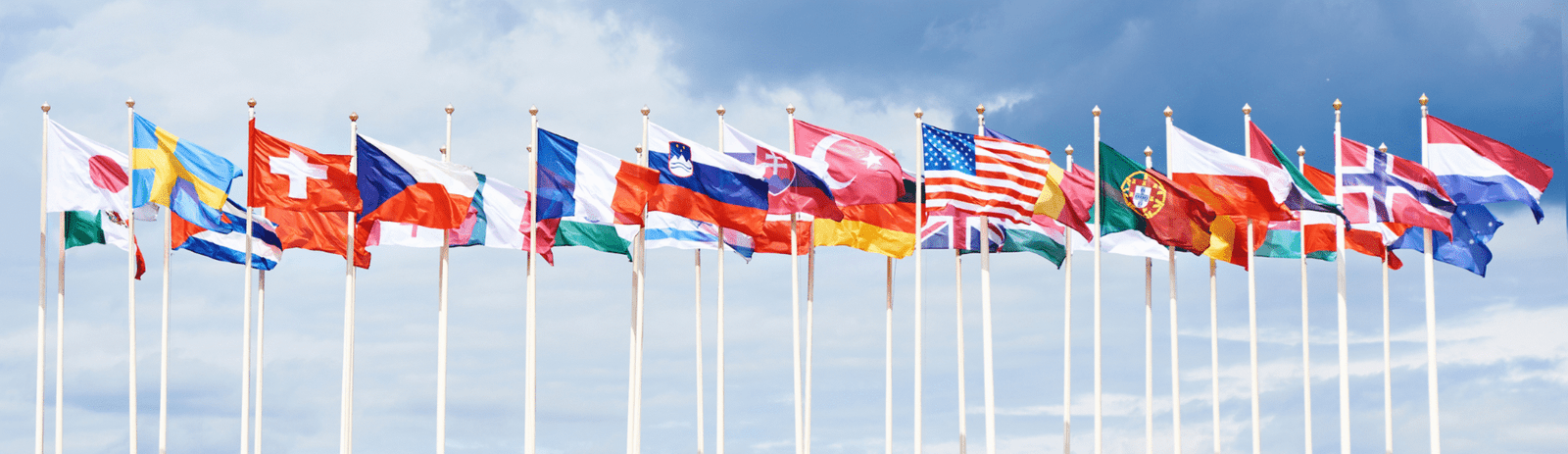
Every culture speaks about rivers with a unique voice, and learning river in different languages opens a window into how communities connect with water, land, and daily life.
Each word carries emotion, history, and a sense of place. Exploring the translation of river reveals how deeply people value flowing water across continents.
Why Learning ‘River’ in Different Languages Matters
Understanding the translation of river helps us appreciate how various societies perceive landscapes.
The river meaning often goes beyond water it can represent life, direction, memory, or spiritual movement.
When you learn how to say river in different languages, you uncover the cultural importance of water in storytelling, travel, greetings, and even ceremonial life.
River in European Languages

- Spanish – río (pronounced REE-oh)
Used casually in travel, geography class, and everyday talk. No formality difference. - French – rivière (ree-VYEHR)
Refers to smaller rivers; everyday use. Fleuve (fluhv) is used for major rivers flowing into the sea. - German – Fluss (flooss)
Common in maps and nature descriptions; no formal variation. - Italian – fiume (FYOO-meh)
Often used poetically to describe movement or emotions. - Portuguese – rio (HEE-oh)
Appears in city names like Rio de Janeiro; neutral tone. - Greek – potámi (po-TAH-mee)
Often used symbolically in stories and sayings. - Polish – rzeka (ZHEH-kah)
Spoken casually, but also appears in folk songs about landscapes.
Ocean in Different Languages
- English: Ocean
- Spanish: Océano
- French: Océan
- Italian: Oceano
- Portuguese: Oceano
- German: Ozean
- Dutch: Oceaan
- Greek: Okeanos (Ωκεανός)
- Russian: Okean (Океан)
- Arabic: Muhit (محيط)
- Hindi: Samudra (समुद्र)
- Japanese: Umi (海)
- Chinese: Haiyang (海洋)
- Korean: Badah (바다)
- Turkish: Okyanus
River in Latin
The Latin word for river is:
- Flumen – the most common Latin word for a river
- Rivus – a small river or stream
- Amnis – a flowing river or strong stream
Example:
- Flumen magnum = Great river
Lake in Different Languages
- English: Lake
- Spanish: Lago
- French: Lac
- Italian: Lago
- Portuguese: Lago
- German: See
- Dutch: Meer
- Russian: Ozero (Озеро)
- Greek: Limni (Λίμνη)
- Arabic: Buhayra (بحيرة)
- Hindi: Jheel (झील)
- Japanese: Mizuumi (湖)
- Chinese: Hu (湖)
- Korean: Hosu (호수)
- Turkish: Göl
Water in Different Languages
- English: Water
- Spanish: Agua
- French: Eau
- Italian: Acqua
- Portuguese: Água
- German: Wasser
- Dutch: Water
- Russian: Voda (Вода)
- Greek: Nero (Νερό)
- Arabic: Maa (ماء)
- Hindi: Pani (पानी)
- Japanese: Mizu (水)
- Chinese: Shui (水)
- Korean: Mul (물)
- Turkish: Su
Rain in Different Languages

- English: Rain
- Spanish: Lluvia
- French: Pluie
- Italian: Pioggia
- Portuguese: Chuva
- German: Regen
- Dutch: Regen
- Russian: Dozhd (Дождь)
- Greek: Vrochi (Βροχή)
- Arabic: Matar (مطر)
- Hindi: Barish (बारिश)
- Japanese: Ame (雨)
- Chinese: Yu (雨)
- Korean: Bi (비)
- Turkish: Yağmur
River in Native American Languages
Different Native American languages use different words:
- Dakota (Sioux): Wakpa
- Lakota: Wakpa
- Cherokee: Ama Gayi
- Navajo: Tó
- Choctaw: Bok
- Hopi: Paahu
- Ojibwe: Ziibi
- Mohawk: Kahyonhá:ke
- Cree: Sipi
- Blackfoot: Ohkita
Example:
- Mississippi comes from an Ojibwe word meaning “Great River.”
Mountain in Different Languages
- English: Mountain
- Spanish: Montaña
- French: Montagne
- Italian: Montagna
- Portuguese: Montanha
- German: Berg
- Dutch: Berg
- Russian: Gora (Гора)
- Greek: Vouno (Βουνό)
- Arabic: Jabal (جبل)
- Hindi: Pahad (पहाड़)
- Japanese: Yama (山)
- Chinese: Shan (山)
- Korean: San (산)
- Turkish: Dağ
Stream in Different Languages
- English: Stream
- Spanish: Arroyo
- French: Ruisseau
- Italian: Ruscello
- Portuguese: Riacho
- German: Bach
- Dutch: Beek
- Russian: Ruchey (Ручей)
- Greek: Rema (Ρέμα)
- Arabic: Jadwal (جدول)
- Hindi: Chhoti Nadi
- Japanese: Kawa / Ogawa (小川 small stream)
- Chinese: Xi (溪)
- Korean: Gaegok (계곡 stream/valley stream)
- Turkish: Dere
River in Native American Languages
- Cherokee – ama-uyvti (ah-mah OOY-v-tee) – “moving water”
- Navajo – tsékooh (tseh-KOH) – used to describe a river in a canyon
- Lakota – mni-tȟáwi (mnee-TAH-wee)
- Hopi – puwka (POOK-ah)
- Ojibwe – ziibi (ZEE-bee) – widely used in place names
- Ute – túruwa (TOO-roo-wah)
- Chinook – šáx̣a (SHAH-kha)
River in Asian Languages
- Hindi – nadi (NUH-dee)
Common in daily conversation; nadī has a slightly poetic tone. - Chinese (Mandarin) – hé (huh)
Used for general rivers; jiāng (jyahng) for major rivers. - Japanese – kawa (KAH-wah)
Also appears in surnames, symbolizing purity or flow. - Korean – gang (gahng)
Used formally in geographic names like “Han-gang.” - Thai – mǎe-nám (meh-NAHM)
Literally “mother water,” showing deep respect. - Malay – sungai (SOON-gai)
Often used in place names. - Filipino (Tagalog) – ilog (EE-log)
Used in everyday talk; neutral tone.
River in Middle Eastern Languages
- Arabic – nahr (na-HR)
Formal word used in writing; wādī (WAH-dee) refers to a seasonal riverbed. - Hebrew – nahar (nah-HAR)
Appears in both modern and biblical contexts. - Turkish – nehir (neh-HEER)
Common in formal writing; ırmak (UR-mak) is more poetic. - Persian – rud (rood)
Used in nature poetry and maps. - Kurdish – çem (CHEM)
Casual and friendly in tone. - Armenian – get (geht)
Used frequently in geography. - Pashto – daryā (dar-YAH)
Also symbolizes abundance and beauty.
River in African Languages
- Swahili – mto (M-toh)
Used in travel, directions, and everyday life. - Zulu – umfula (oom-FOO-lah)
Often appears in proverbs. - Amharic – wenjel (wen-JEL)
Used widely in formal and informal speech. - Yoruba – odò (OH-doh)
Carries cultural and spiritual significance. - Hausa – kogi (KOH-gee)
Common in daily communication. - Somali – webi (WEH-bee)
- Shona – rwizi (RWE-zee)
River in Indigenous Languages
- Maori – awa (AH-wah)
Appears often in place names. - Inuit (Inuktitut) – kuuk (koo-k)
Refers to flowing water regardless of size. - Samoan – vai-tafe (vai-TAH-feh)
Used in daily speech. - Hawaiian – kahawai (kah-hah-WAI)
Symbolizes purity and life. - Fijian – wai-tuvu (wai-TOO-voo)
- Tongan – tāvae (TAH-vay)
- Aymara – jawira (hah-WEE-rah)
River in Iroquoian Language Family
- Mohawk – kanónhsa’ne (kah-NOHN-sah-neh)
- Seneca – ohniyoh (OH-nee-yoh)
- Oneida – ohalú·tu (oh-ha-LOO-too)
- Onondaga – oniya·néh (oh-nee-YAH-neh)
- Tuscarora – wáhkyeʼ (WAHK-yeh)
- Wyandot – yandeh (YAN-deh)
- Cayuga – onëhsaʼ (oh-NEH-sah)
River in Plains Languages
- Comanche – tuhabi (too-HAH-bee)
- Crow – baashíia (bah-SHEE-yah)
- Blackfoot – misomá (mee-SO-mah)
- Arapaho – heebeitéí (hee-beh-TAY-ee)
- Cheyenne – ma’ėhóxe (mah-EH-ho-heh)
- Kiowa – táugu (TAH-oo-goo)
- Pawnee – ruurít (roo-REET)
River in Southeastern Languages
- Choctaw – bok (bohk)
- Chickasaw – bokka (BOHK-kah)
- Creek (Muscogee) – hvcce (huh-cheh)
- Seminole – hatchi (HAT-chee)
- Catawba – wána (WAH-nah)
- Yuchi – tsuwé (tsoo-WAY)
- Tunica – hóku (HOH-koo)
River in Northwestern Languages
- Tlingit – héen (hayn)
- Haida – stláan (st-LAHN)
- Tsimshian – t’łi (t-LEE)
- Salish – sélxʷ (sell-hw)
- Kwakwaka’wakw – bik̓wa (BEEK-wah)
- Nuu-chah-nulth – ḥiy̓uu (hee-YOO)
- Coast Miwok – tamiš (TAH-meesh)
River in Additional World Languages
- Irish Gaelic – abhainn (AH-vin)
- Welsh – afon (AH-von)
- Basque – ibaia (ee-BAI-ah)
- Romanian – râu (ruh-OO)
- Dutch – rivier (ree-VEER)
- Danish – flod (flodh)
- Swedish – flod (floh-d)
- Finnish – joki (YOH-kee)
- Estonian – jõgi (YEU-gee)
- Mongolian – gol (gohl)
- Tibetan – chu (choo)
- Sinhala – ganga (GUN-gah)
- Bengali – nôdī (noh-dee)
- Urdu – daryā (dar-YAA)
- Uzbek – daryo (dar-YO)
Examples of Using ‘River’ in Sentences Across Languages
- Spanish – El río está muy tranquilo hoy.
The river is very calm today. - French – La rivière traverse notre village.
The river runs through our village. - Arabic – النهر واسع هذا الصباح
The river is wide this morning. - Hindi – आज नदी का पानी साफ है।
The river’s water is clear today. - Japanese – 川のそばで休みました。
I rested by the river. - Turkish – Nehir yavaşça akıyor.
The river flows gently. - Swahili – Mto umejaa baada ya mvua.
The river is full after the rain. - Urdu – در یا آج پرسکون ہے۔
The river is peaceful today. - Persian – رود از میان شهر میگذرد
The river passes through the city. - Thai – แม่น้ำเงียบมากตอนเย็น
The river is very quiet in the evening.
Cultural Meaning of ‘River’ Around the World
Rivers often symbolize renewal, direction, and survival. In Asia, major rivers represent heritage and collective memory. In Indigenous cultures, a river is a living presence, connected to ancestors and story paths.
African traditions often see rivers as sources of blessing, while European folklore uses rivers as markers of journeys and borders. Each word for “river” carries a unique reflection of how communities understand water as both practical and spiritual.
What Is the Celtic Word for River?
In Celtic languages, the word for river varies depending on the specific language within the Celtic family. Celtic languages include Irish, Scottish Gaelic, Welsh, and Breton, and each has its own term.
Common Celtic words for river include:
- Abhainn – Irish Gaelic word for river
- Abhainn – Scottish Gaelic word for river (same spelling as Irish)
- Afon – Welsh word for river
- Aven / Afon – Breton word for river
- Dubron / Dour – Ancient Celtic root meaning water or river
- Avon – A name used in Britain derived from the Celtic word for river
💡 Interesting Fact:
Many rivers in the United Kingdom are named Avon because the original Celtic inhabitants simply called them “river.” So the name literally means “River River.”
What Is Greek for River?
In the Greek language, the word for river is:
- Ποταμός (Potamós) – Modern and Ancient Greek word meaning river
Examples of usage:
- Ο ποταμός είναι μεγάλος. – The river is big.
- Ποταμός Νείλος – Nile River
Greek also has related words:
- Ρέμα (Réma) – Stream or small river
- Υδάτινος δρόμος – Waterway
💡 Many scientific words use the Greek root “potamo-”, such as potamology, the study of rivers.
What Is the Old Norse Word for River?
In Old Norse, the language spoken by the Vikings, the common word for river was:
- Á – Meaning river or stream
Examples from Norse place names:
- Hvítá – “White River”
- Markarfljót – A famous river in Iceland
Other related Old Norse water terms:
- Fljót – Large river
- Bekkr – Brook or small stream
- Vatn – Water or lake
💡 Many Scandinavian river names today still contain “á.”
What Is the Gothic Word for River?
Gothic is an ancient Germanic language spoken by the Goths around the 4th–6th centuries.
The Gothic word related to river or flowing water includes:
- Ahwa – Water, river, or stream
- Aƕa – Alternate Gothic spelling meaning flowing water
This word is linguistically related to similar terms in other Germanic languages:
| Language | Word | Meaning |
|---|---|---|
| Gothic | Ahwa | River / water |
| Old High German | Aha | River |
| Old English | Ea | River |
| German | Ache | Stream or river |
💡 These words all come from the Proto-Germanic root *ahwō, meaning flowing water.
FAQs
What is the ancient word for river?
Ancient languages used several words for river, such as Potamos (Greek), Ahwa (Gothic), and Á (Old Norse). These words often meant flowing water or stream.
What is the Latin word for river?
The Latin word for river is Flumen. Another Latin term is Rivus, which means a small river or stream.
What is the Old English word for river?
In Old English, the word Ēa (Ea) was used to mean river or running water.
Why are many rivers called Avon?
The name Avon comes from a Celtic word meaning river. Early inhabitants used it as a general name for rivers, so today many places have rivers called Avon.
What language root is commonly used for river names?
Many European river names come from Proto-Indo-European and Celtic roots, such as danu, dubron, and ahwō, which all refer to water or flowing rivers.
Conclusion
Exploring river in different languages helps us appreciate how deeply cultures are tied to flowing water. Every translation of river shows a unique worldview, connecting language to land, memory, and identity.
Learning how to say river in different languages brings you closer to the stories people carry in their landscapes.

Ava Johnson
I’m Ava Johnson, a language lover and content writer who enjoys exploring words across cultures. I write to make languages simple, meaningful, and easy to understand for everyone. My passion is creating content that helps readers connect with different languages, phrases, and meanings in a practical way. Through my writing, I aim to educate, inspire, and make learning feel enjoyable. I believe language is a bridge that brings people closer. Every article I write is crafted with clarity, care, and curiosity.
Books by Ava Johnson:
-
Words Without Borders
-
The Beauty of Global Languages