

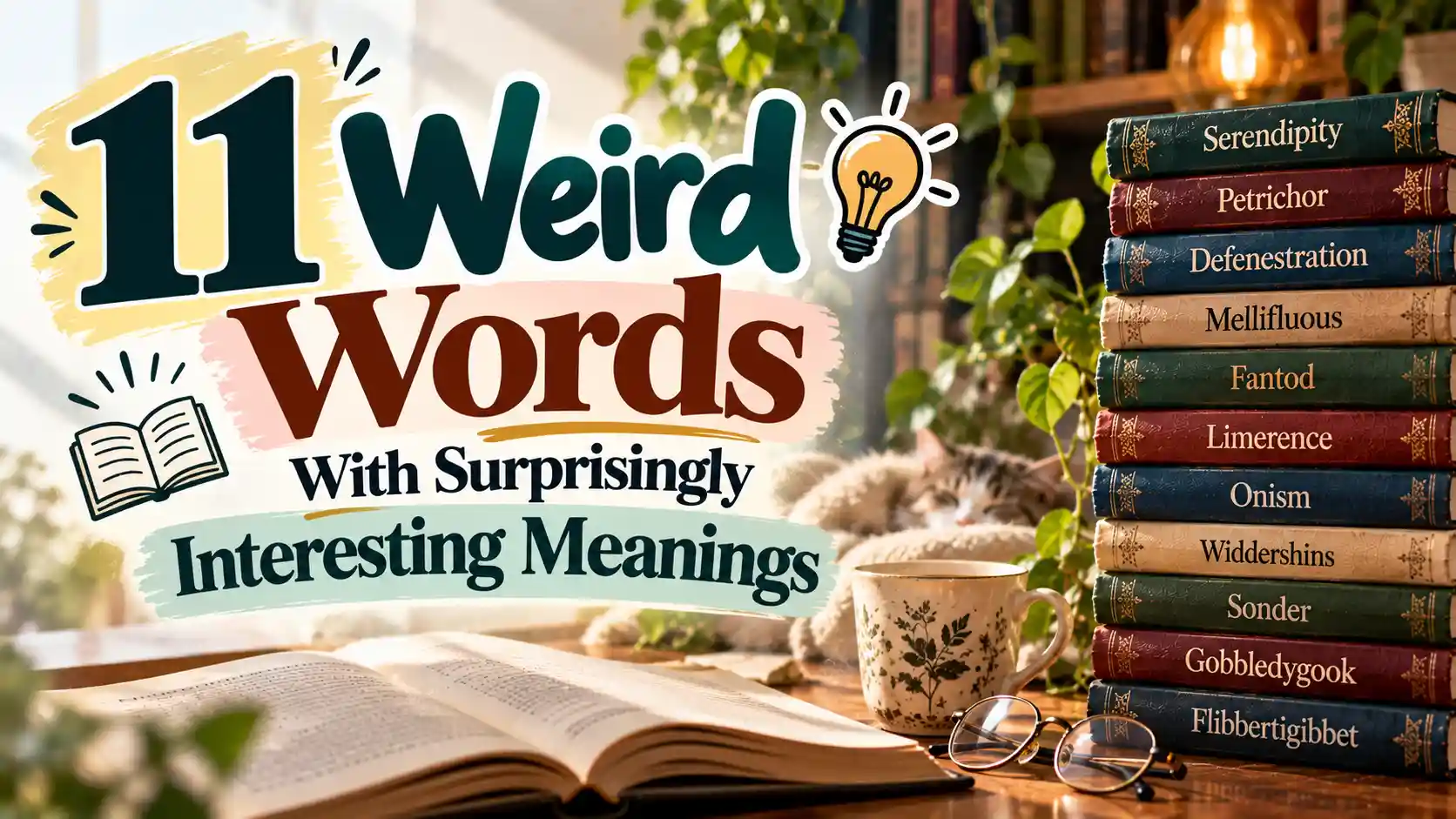
Language is a living, breathing entity, constantly evolving and absorbing the quirks of history. Sometimes, we encounter terms that sound bizarre or entirely made-up, yet they describe very real, human experiences. Exploring 11 weird words with surprisingly interesting meanings can transform the way you communicate and appreciate the depth of the English language. Whether you are a writer, a student, or simply a lover of trivia, these peculiar linguistic gems will add a touch of sophistication to your daily conversations. Let us dive into these strange words and uncover the stories hidden behind their syllables.
11 Weird Words and Their Hidden Histories
From obscure objects to elusive feelings, here are 11 strange yet useful words that offer surprising insights into the human condition.
1. Petrichor
This beautiful term refers to the pleasant, earthy scent that accompanies the first rain after a long period of warm, dry weather. It comes from the Greek ‘petra’ (stone) and ‘ichor’ (the fluid that flows in the veins of the gods).
2. Defenestration
While it sounds academic, it literally means the act of throwing someone or something out of a window. It has a surprisingly dark history rooted in political disputes, specifically the Defenestrations of Prague.
3. Gobbledygook
Coined by Maury Maverick in 1944, this word describes language that is nonsensical or overly pompous. It perfectly captures the frustration of reading overly bureaucratic documents.
4. Vellichor
A poetic term invented by John Koenig for the ‘Dictionary of Obscure Sorrows,’ vellichor is the strange wistfulness of used bookstores, where you are surrounded by thousands of old books you will never have time to read.
5. Pandiculation
Have you ever stretched your entire body while yawning? That involuntary act of stretching and stiffening your limbs is called pandiculation, often seen in animals waking from a nap.
6. Callipygian
This sophisticated adjective refers to a person who has well-shaped or beautiful buttocks. It is derived from the Greek ‘kallipygos’, famously associated with a specific statue of Aphrodite.
7. Tittynope
An old but amusing word, a tittynope refers to a small quantity of something left over—a tiny scrap of food on a plate or a little bit of drink left in a glass.
8. Erinaceous
Derived from the Latin word for hedgehog, this unusual adjective describes something that looks like or relates to a hedgehog. Use it when describing anything particularly spiky or bristly.
9. Agelast
If you know someone who never laughs, you have met an agelast. The word comes from Greek roots meaning ‘non-laugher,’ making it a perfect descriptor for a notoriously grumpy character.
10. Biblioklept
A biblioklept is someone who habitually steals books. While it sounds like a character from a mystery novel, it is a legitimate term for those who simply cannot resist walking away with a library volume.
11. Apricity
One of the most beautiful winter words, apricity refers specifically to the warmth of the sun in winter. It describes that fleeting, comforting glow on a cold, crisp afternoon.
Deepen Your Linguistic Journey
If you enjoyed learning these 11 weird words, these curated books will provide you with thousands more fascinating terms and their historical origins.
The Dictionary of Highly Unusual Words

Best For: Curious readers and trivia enthusiasts.
A classic reference for word lovers, this book dives into the most bizarre entries found in the English lexicon.
Practical Tips: Keep this on your coffee table for quick conversation starters when guests visit.
Recommended: Reference Books
Unique, Unloved, and Unusual Words

Best For: Writers and students looking to enhance their prose.
Containing over 900 terms, this guide is excellent for those looking to expand their vocabulary significantly.
Practical Tips: Learn one new word a day to slowly integrate these terms into your daily writing.
Recommended: Vocabulary Builders
Why You Say It

Best For: History buffs and language lovers.
This book explains the fascinating stories behind the phrases and words we take for granted every day.
Practical Tips: Use the historical anecdotes found here to add flavor to your speeches or presentations.
Recommended: Etymology Books
Dictionary of the Strange, Curious & Lovely

Best For: Creative writers and poets.
Focuses on words that are not just strange, but carry a certain aesthetic beauty in their meaning.
Practical Tips: Great for poets looking for descriptive terminology that fits specific moods.
Recommended: Creative Writing Resources
The Weird World of Words: A Guided Tour

Best For: Casual readers seeking entertainment.
A comprehensive tour through the oddities of language, perfect for anyone who loves word games.
Practical Tips: Read a chapter a week to build your word bank steadily.
Recommended: Linguistic Guides
How to Choose the Right Word Reference Book
When selecting a book about unusual words, consider your primary goal. If you are a writer looking to improve your vocabulary, choose a guide with clear definitions and usage examples. If you are more interested in history, look for books that focus on etymology and the cultural stories behind terms. Hardcover editions make beautiful gifts, while smaller pocket dictionaries are perfect for carrying on your commute to learn on the go.
Frequently Asked Questions
Why is it fun to learn obscure words?
Learning unusual words helps you describe specific feelings or situations that common language often fails to capture. It turns everyday observations into a more vivid experience.
Are these words still used today?
While some are considered archaic, most of these words are still perfectly valid in the English language and can be used to add flair and precision to your writing.
Final Thoughts
The English language is an endless source of curiosity. By incorporating these 11 weird words into your vocabulary, you not only improve your communication skills but also gain a deeper appreciation for the historical and cultural forces that shape how we describe our world. Start small, pick one word that resonates with you today, and see how often you can find a reason to use it.
