

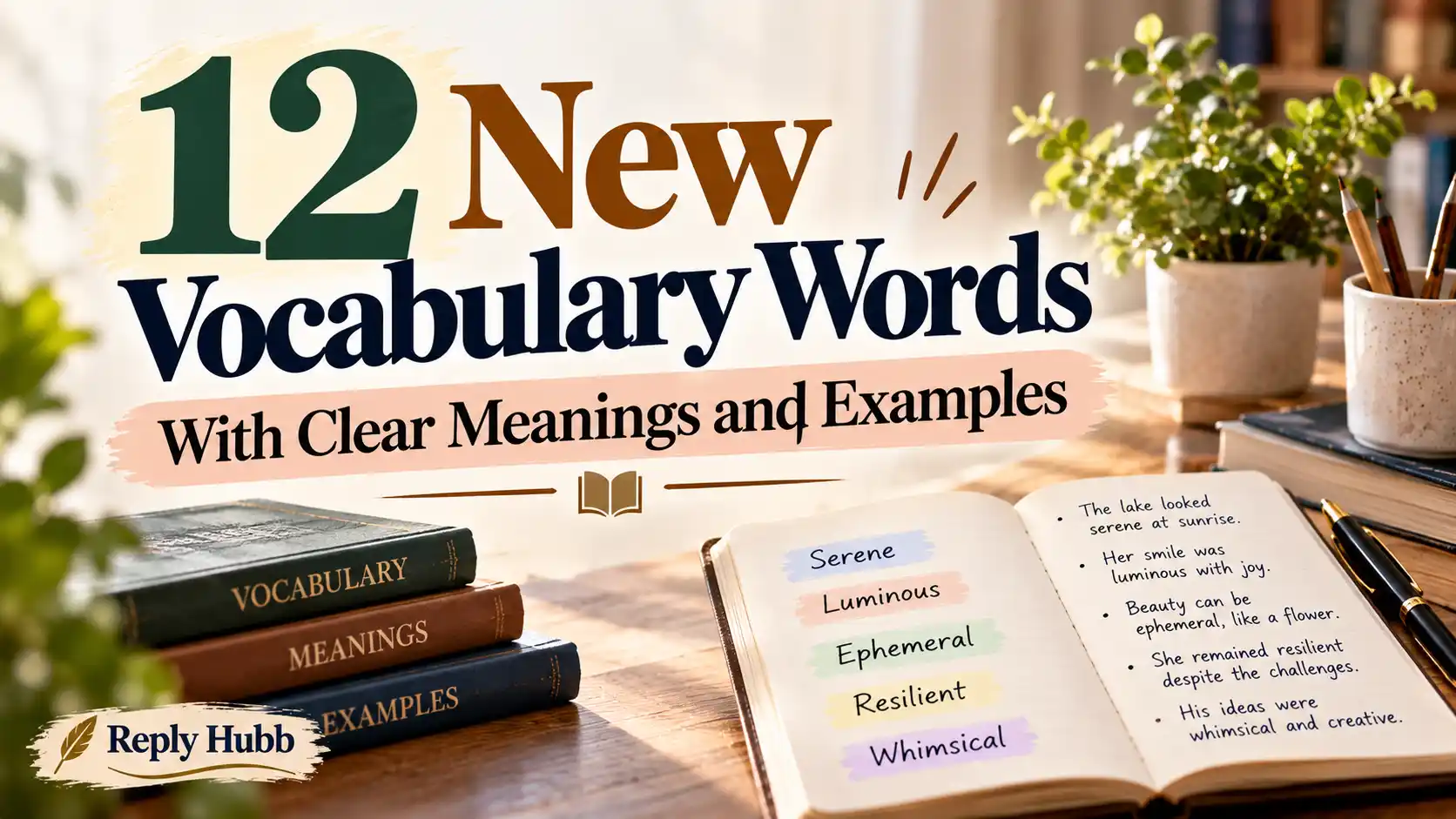
Do you ever feel like you are using the same basic words over and over again? Expanding your lexicon is one of the most effective ways to command attention in professional meetings and creative writing projects. Learning new vocabulary words with clear meanings and examples helps you express complex ideas with precision and elegance. In this guide, we have curated 12 sophisticated terms that are perfect for daily use. Whether you are a student preparing for exams or a professional looking to sharpen your communication, these words will help you convey your thoughts with absolute clarity.
12 Essential New Vocabulary Words to Master
Here is a list of 12 carefully selected words designed to enhance your daily speech and writing, complete with definitions and practical examples.
1. Ephemeral
This word refers to something lasting for a very short time. Example: The beauty of the sunset was ephemeral, fading into darkness within minutes.
2. Eloquent
Describing someone who is fluent or persuasive in speaking or writing. Example: She gave an eloquent speech that moved the entire audience to tears.
3. Meticulous
Showing great attention to detail; being very careful and precise. Example: He was meticulous about filing his taxes to ensure no errors were made.
4. Pragmatic
Dealing with things sensibly and realistically in a way that is based on practical considerations. Example: Instead of dreaming of impossible solutions, she took a pragmatic approach to solve the problem.
5. Resilient
Able to withstand or recover quickly from difficult conditions. Example: The small business proved to be resilient, thriving even after the economic downturn.
6. Ubiquitous
Present, appearing, or found everywhere. Example: Smartphones have become ubiquitous in modern society, carried by nearly every person on the street.
7. Enervate
To cause someone to feel drained of energy or weakened. Example: The intense heat of the afternoon sun began to enervate the hikers.
8. Superfluous
Unnecessary, especially through being more than enough. Example: The report contained a lot of superfluous information that distracted from the main point.
9. Mitigate
To make less severe, serious, or painful. Example: We need to take steps to mitigate the risks associated with this new investment project.
10. Candid
Truthful and straightforward; frank. Example: He offered a candid assessment of the company’s current struggles during the staff meeting.
11. Benevolent
Well-meaning and kindly. Example: The foundation was known for its benevolent contributions to local education programs.
12. Scrupulous
Diligent, thorough, and extremely attentive to details. Example: She was scrupulous about keeping her workspace organized and clean at all times.
Recommended Resources to Expand Your Vocabulary
To continue your journey of linguistic growth, these top-rated books and guides provide structured methods to learn new words consistently.
Vocabulary Power Plus – Level 12

Best For: Students and advanced learners
This book is perfect for advanced learners looking to solidify their vocabulary foundations for academic or professional success.
Practical Tips: Incorporate one chapter per week to allow for better retention of the definitions and root words.
Recommended: Vocabulary Power Plus Series
1000 Powerful English Vocabulary Words

Best For: English language beginners
A comprehensive guide that simplifies complex vocabulary for those who want to speak smarter and write better daily.
Practical Tips: Use the lists provided to create flashcards for your daily commute.
Recommended: Beginner-Friendly Language Guides
Vocabulary Power Plus for the New SAT – Book Four

Best For: SAT students
Specifically tailored for test preparation, this resource is excellent for high-stakes vocabulary retention.
Practical Tips: Focus on the context clues exercises to improve your reading comprehension simultaneously.
Recommended: Test Prep Collection
100 Powerful Vocabulary Words

Best For: Busy professionals
A high-impact selection of words with clear examples that are immediately applicable in casual conversation.
Practical Tips: Pick three words from this book and use them in at least one email or conversation every day.
Recommended: Quick Vocabulary Boosters
How to Choose the Right Vocabulary Tool
When choosing a vocabulary resource, consider your primary goal. Are you studying for a specific test like the SAT, or are you just looking to improve your daily communication? Students should prioritize test-prep guides that offer consistent practice drills. Professionals, on the other hand, should look for books that emphasize usage in real-world professional scenarios. Always ensure that the guide includes context-based sentences rather than just simple definitions.
Frequently Asked Questions
How often should I learn new vocabulary?
Learning 3-5 new words per day is a sustainable rate that allows for long-term retention.
Is it better to memorize definitions or use them in sentences?
Using them in sentences is much more effective because it helps you understand the nuance and proper context of the word.
Final Thoughts
Expanding your vocabulary is a rewarding habit that opens new doors for personal and professional growth. By focusing on learning 12 new words at a time and applying them in your daily life, you will soon notice a significant difference in how you connect with others. Start with the words listed above and pick up one of the recommended resources to keep your momentum going.
