

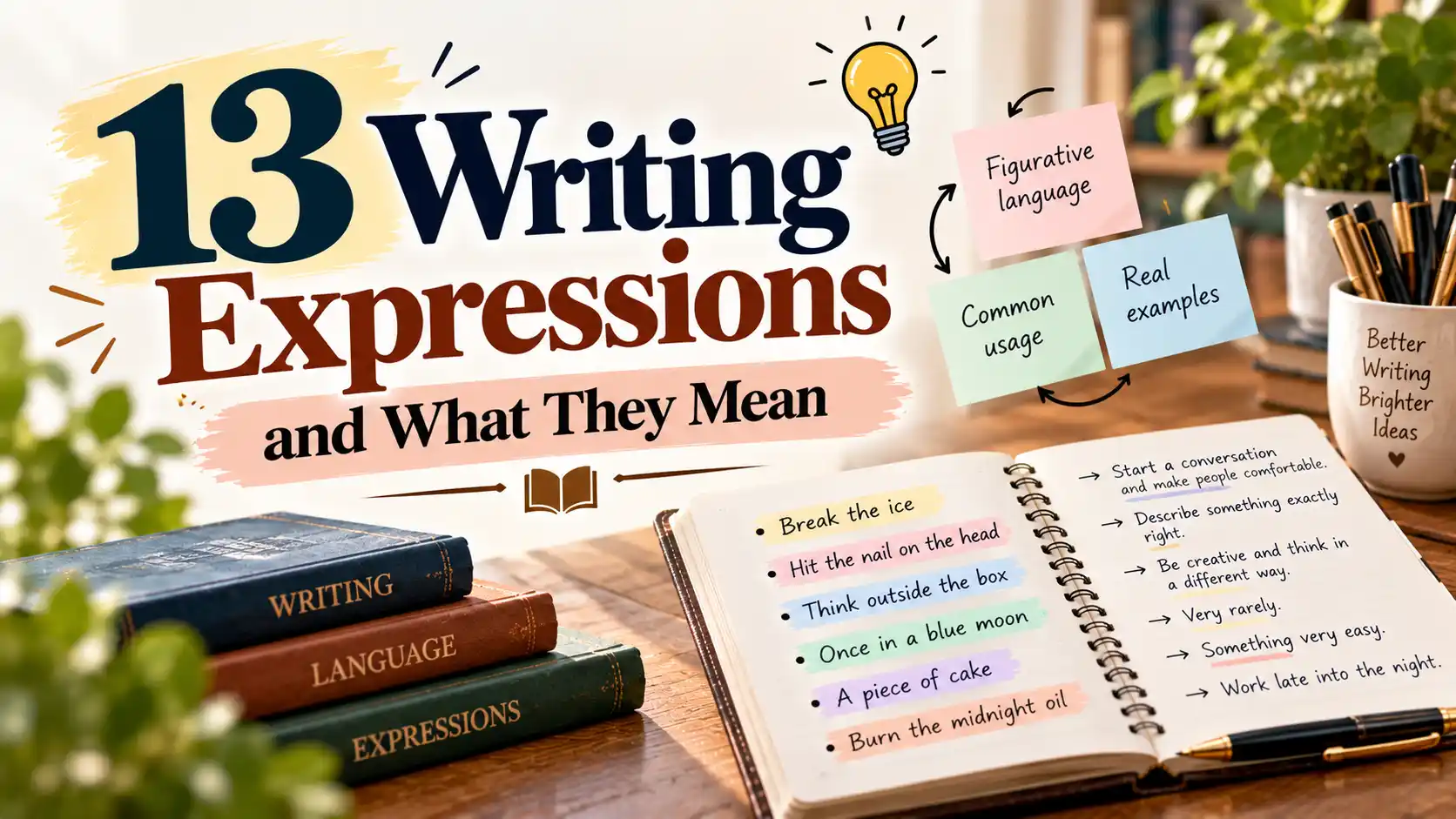
Writing is more than just conveying information; it is the art of connecting with your reader. Often, writers get stuck in a repetitive loop, using the same stale phrases that strip the life out of their prose. To elevate your storytelling or professional communication, mastering idiomatic expressions is essential. These 13 writing expressions and what they mean are designed to help you add color, nuance, and authority to your work. Whether you are crafting a novel or a blog post, understanding these literary devices will help you breathe new life into every sentence you write.
Understanding 13 Powerful Writing Expressions
A quick guide to essential writing idioms and phrases that sharpen your narrative style, improve flow, and engage readers more effectively.
1. To Paint a Picture
This expression means to describe something so vividly that the reader can visualize it in their mind. It is about moving beyond basic facts to include sensory details like color, texture, and light.
2. Between the Lines
This refers to finding hidden meanings or nuances in a text that aren’t stated explicitly. In writing, you ‘read between the lines’ when you infer intent or emotion from a character’s subtle dialogue.
3. To Cut to the Chase
Essential in professional and punchy writing, this means getting directly to the point. It is a reminder to remove unnecessary fluff and prioritize the core message.
4. A Turn of Phrase
This refers to a clever or distinctive way of expressing something. Developing your own unique ‘turn of phrase’ is what gives your writing a recognizable voice.
5. To Weave a Tale
Often used in creative writing, this implies the art of storytelling where plot threads, character arcs, and themes are intricately connected to form a cohesive narrative.
6. A Blank Slate
A metaphor for starting over or beginning a new project without any previous baggage. It is often used to describe character development or a fresh narrative structure.
7. To Hook the Reader
This is the goal of any strong opening paragraph. The ‘hook’ is the compelling detail, question, or statement that grabs the audience’s attention immediately.
8. Plot Twist
A radical change in the expected direction of a story. When writing, use this strategically to keep your readers engaged and avoid predictable outcomes.
9. Show, Don’t Tell
The most famous rule in writing. Instead of telling the reader that a character is angry, show it by describing their clenched fists or the sharp edge in their voice.
10. Stream of Consciousness
A narrative device that captures the flow of a character’s thoughts as they happen, often without traditional punctuation or linear structure.
11. The Cliffhanger
Ending a chapter or segment on a high-tension note. It forces the reader to keep going to see what happens next.
12. Character Arc
The journey of transformation a character undergoes from the beginning of the story to the end.
13. The Devil is in the Details
This reminds writers that the most important parts of a story often hide in the smallest, most specific observations.
Tools to Elevate Your Writing Process
To master these expressions and improve your craft, you need the right tools by your side. Here are some highly recommended resources for writers.
The Elements of Style

Best For: Beginner and Intermediate Writers
A classic guide for clear and concise writing. It covers the fundamentals of grammar and style that every writer should know.
Practical Tips: Use this as a desk reference when editing your work to ensure your sentences remain sharp and effective.
Recommended: Academic & Professional Writing Guides
How to Choose Writing Resources
When selecting books or tools to help you master writing expressions, look for resources that emphasize active practice rather than passive reading. Prioritize guides that offer writing prompts, editorial checklists, or deep dives into the mechanics of sentence structure. The goal is to bridge the gap between theory and execution.
Frequently Asked Questions
Why is it important to use expressions in writing?
Expressions add flavor, rhythm, and relatability to your prose, preventing your writing from sounding like a dry manual.
How can I improve my writing voice?
Read widely, practice daily, and study how your favorite authors utilize idiomatic expressions to convey meaning.
Final Thoughts
Mastering these 13 writing expressions and understanding their meanings is a major step toward becoming a more versatile and engaging writer. By incorporating these tools into your daily practice, you will find that your prose becomes not only more professional but also more resonant with your audience. Keep experimenting, stay consistent, and let your unique voice shine through in every piece you produce.
