

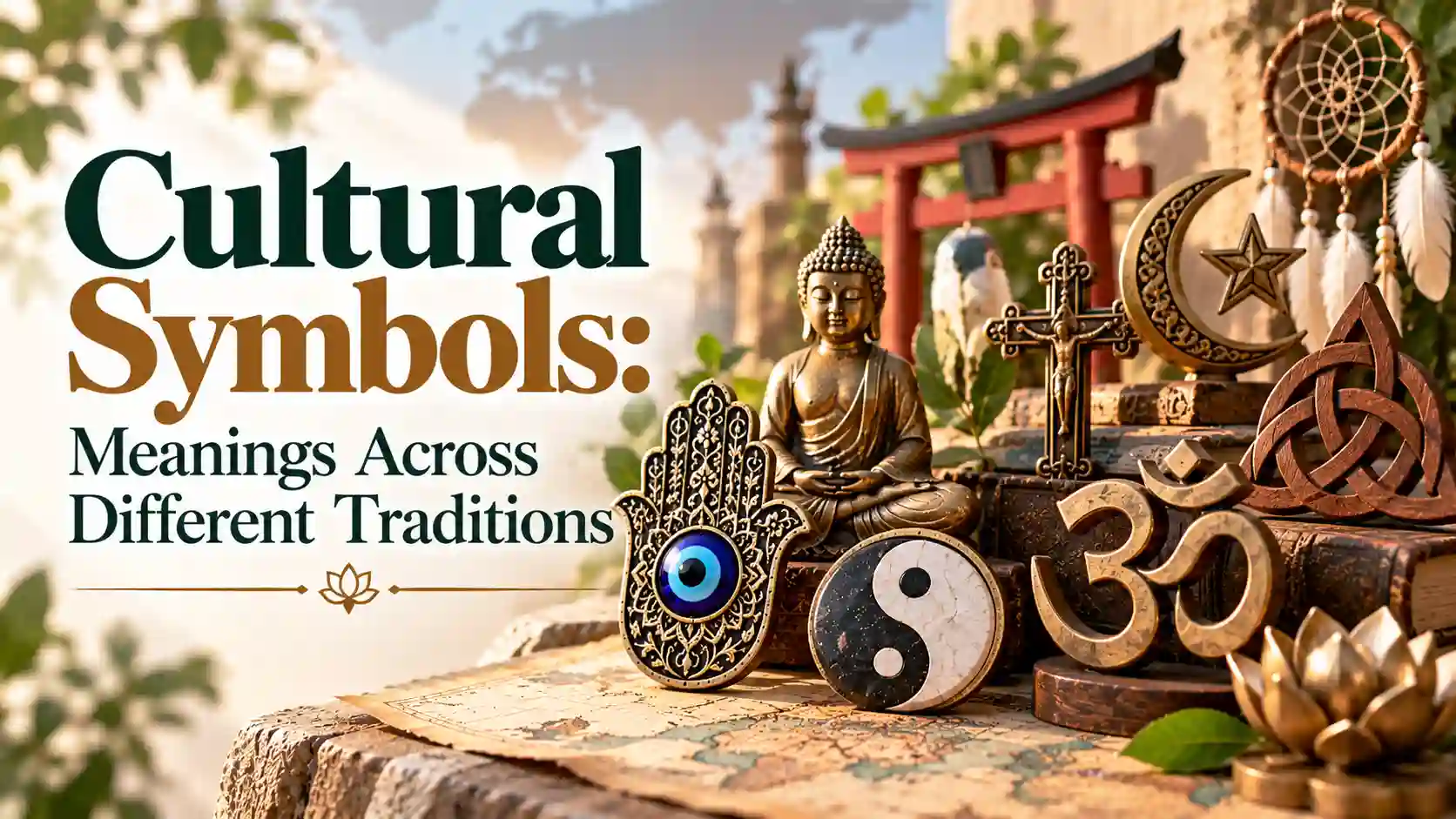
Cultural symbols serve as the silent language of humanity, bridging gaps between generations, religions, and continents. From the lotus flower in Eastern philosophies to the cross in Western traditions, these signs carry deep, layered meanings that shape our perception of reality. Understanding cultural symbols and their meanings across different traditions allows us to appreciate the diversity of human expression and the universal themes that unite us. Whether used in art, architecture, or spiritual practice, these emblems represent our deepest values, fears, and hopes. Join us as we decode the fascinating history and significance behind these enduring icons.
The Power of Universal Symbols
This guide explores the significance of symbols, why context matters, and how to interpret signs from various cultures correctly.
1. The Lotus Flower: Purity and Enlightenment
In many Eastern cultures, particularly in Hinduism and Buddhism, the lotus is a profound symbol of purity and spiritual awakening. Because it grows in muddy water yet blooms pristine, it represents the soul rising above worldly attachments. When interpreting this symbol, consider the color, as different hues often signify specific levels of enlightenment or divine connection.
2. The Cross: A Multifaceted Emblem
While often associated with Christianity today, the cross has ancient roots appearing in various forms across pre-Christian civilizations. It signifies the intersection of physical and spiritual worlds. When examining cross symbolism, notice the design variations—such as the Ankh in ancient Egypt, which symbolizes eternal life, versus the Latin cross, which serves as a central icon for the atonement.
3. The Mandala: Sacred Geometry and Unity
Mandala, meaning circle in Sanskrit, is a powerful tool used in meditative practices. These intricate designs reflect the cosmos and the interconnectedness of all things. The primary mistake observers make is viewing them as mere art; in reality, they are functional maps for introspection. When working with mandalas, focus on the center point, which represents the source of existence.
4. The Hamsa: Protection and Blessings
Found across North Africa and the Middle East, the Hamsa is a palm-shaped amulet known for warding off the evil eye. Its significance transcends religion, appearing in both Jewish and Islamic traditions as a symbol of power and protection. Always look for the eye icon in the palm, which serves as the active element of protection against negative energies.
Deepen Your Knowledge of Symbolic Language
To truly understand the depth of cultural symbols, one must turn to well-researched literature. These resources provide excellent insights into the history and application of iconic designs.
Religious Symbols Explained

Best For: Historical researchers and students of theology
A comprehensive look at symbols that have spanned centuries, focusing on religious origins and evolving definitions.
Practical Tips: Great for historical context during academic research or personal spiritual study.
Recommended: Religious Symbols Explained
A Dictionary of Symbols (Dover Occult)

Best For: Writers and students of symbolism
A classic reference guide that provides deep insights into the meaning of symbols across various occult and historical traditions.
Practical Tips: Keep this as a reference book on your desk for quick look-ups while reading or writing.
Recommended: Dover Occult Reference
The Book of Symbols

Best For: Those who appreciate visual storytelling
A cinematic journey through ancient signs, sacred geometry, and hidden meanings in a beautiful, high-quality format.
Practical Tips: Perfect for coffee table displays as it combines aesthetics with deep, meaningful content.
Recommended: The Encyclopedia of Wonders
Sacred Symbols of the World

Best For: History buffs and archaeology enthusiasts
Decodes 100 ancient signs of power, myth, and meaning from diverse global cultures.
Practical Tips: Use this to understand the nuance of symbols in architectural designs and ancient artifacts.
Recommended: Sacred Symbols Series
Magical Symbols

Best For: Artists and designers
An illustrated guide exploring how spiritual and cultural designs are used across worldwide traditions.
Practical Tips: Excellent for graphic designers or artists looking for inspiration rooted in historical symbolism.
Recommended: Magical Symbols Guide
How to Choose the Right Symbol Resource
When selecting books or guides on cultural symbols, identify whether you need a broad reference guide or a specialized exploration of a specific tradition. For academic purposes, look for encyclopedic texts with strong bibliographies. For creative projects, opt for heavily illustrated guides that showcase the aesthetic variations of symbols across time. Always check that the information is cross-referenced, as meanings can shift depending on geographical and historical context.
Frequently Asked Questions
Why do symbols change meaning over time?
Symbols are influenced by the culture that adopts them. As societies evolve, the values associated with an icon may be adapted to fit new political, religious, or social frameworks.
Are all symbols universal?
Not necessarily. While some, like the circle (representing unity), are found almost everywhere, many symbols have highly specific meanings that are only understood within their originating cultural context.
Final Thoughts
Exploring the world of cultural symbols is a journey into the heart of humanity. These signs are not just decorative; they are manifestations of our shared existence and the distinct ways we interpret the divine. By learning to decode these meanings, we foster deeper cultural empathy and insight. Whether for study or appreciation, these books will serve as an essential guide to the hidden language of our past and present.
