

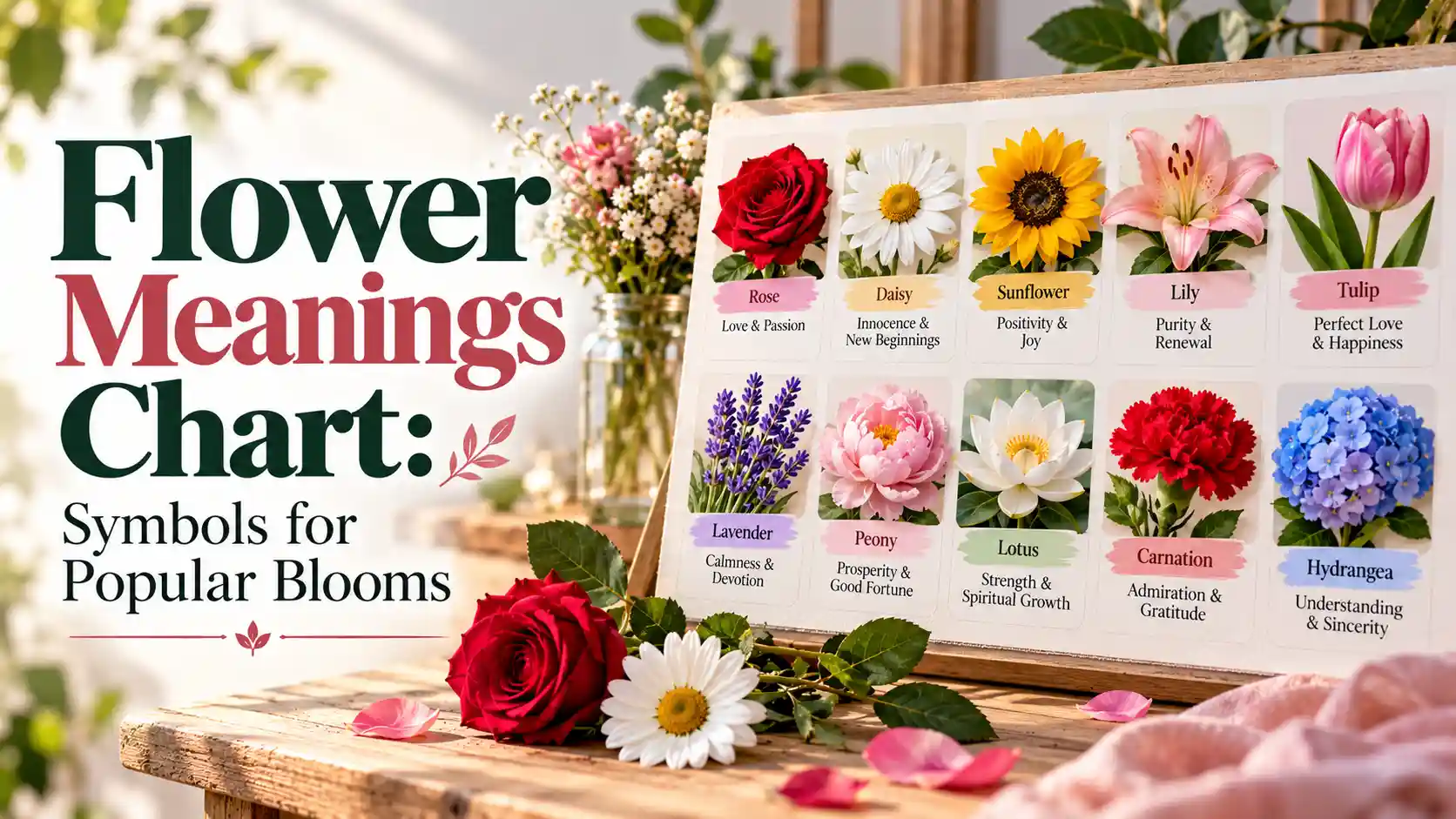
Flowers have communicated human emotions for centuries, serving as a silent language of love, gratitude, and condolences. Understanding the significance behind each blossom can transform a simple bouquet into a deeply personal message. Whether you are planning a wedding, sending a get-well gift, or simply curious about the floriography hidden in your garden, this flower meanings chart provides the essential symbols for popular blooms. Discover how to select flowers with intention and add a layer of poetic meaning to every gift you give.
The Language of Floriography
A quick look at the most meaningful flowers and their traditional symbolism.
1. Red Roses: The Ultimate Symbol of Love
Red roses are the universal standard for romantic love and desire. Giving a red rose tells someone they are cherished and deeply loved. Avoid the mistake of giving too many if you are in the early stages of dating; a single long-stemmed rose often carries more weight and elegance.
2. Sunflowers: Adoration and Longevity
These golden giants symbolize adoration, loyalty, and longevity. Because they follow the sun, they are often associated with positivity and warmth. They are the perfect choice for cheering up a friend or celebrating a strong, enduring friendship.
3. White Lilies: Purity and Sympathy
Often used in funeral arrangements, white lilies represent purity, innocence, and restored peace. While they carry a somber note, they are also beautiful symbols of new beginnings and rebirth, making them appropriate for baptisms or weddings.
4. Peonies: Prosperity and Romance
Peonies are prized for their lush, full blooms. They symbolize prosperity, good luck, and a happy marriage. They are a top choice for bridal bouquets and are often gifted to celebrate anniversaries or significant life milestones.
5. Tulips: Perfect Love
Depending on the color, tulips carry various meanings, but generally, they represent perfect love. Red tulips specifically declare a deep, undying love, while yellow tulips symbolize cheerful thoughts. They are ideal for springtime events when you want to convey optimism.
Essential Resources for Flower Lovers
If you want to dive deeper into the history and symbolism of blooms, these curated guides and charts are perfect for your home or office library.
Contemporary Flower Chart

Best For: Visual learners and floral designers.
A modern, easy-to-read reference chart that organizes flowers by their symbolic meanings for quick lookup.
Practical Tips: Frame this chart and place it in your potting shed or home office to keep floral meanings at your fingertips.
Recommended: Reference Wall Art
MEANING OF FLOWERS: A GUIDE TO BLOOMS FOR EVERY OCCASION OR EVENT

Best For: Gift givers and event organizers.
This guide focuses on matching the right bloom to the right event, ensuring you never commit a floral faux pas.
Practical Tips: Use this book as a checklist before buying arrangements for large family gatherings.
Recommended: Event Planning Guides
Flower Symbols: The Language of Love

Best For: Couples and romantic partners.
A deep dive into the romantic symbolism behind classic garden flowers.
Practical Tips: Perfect for those writing love notes or cards to accompany floral gifts.
Recommended: Romantic Reference Books
Flowers and Their Meanings: The Secret Language and History of Over 600 Blooms

Best For: Serious gardeners and botanists.
An extensive dictionary covering over 600 flowers, providing historical context and deep symbolic meaning.
Practical Tips: Use this as your primary encyclopedic resource when researching obscure or rare flowers.
Recommended: Comprehensive Encyclopedias
Traditional Flower Chart

Best For: History enthusiasts and traditionalists.
Features the classic Victorian-era interpretations of flowers, perfect for traditional floral arrangement research.
Practical Tips: Pair this with the contemporary chart to compare how meanings have evolved over time.
Recommended: Traditional Reference Art
How to Choose the Right Flowers
Selecting the right flower goes beyond just aesthetics. First, consider the message you wish to convey. If it’s a romantic gesture, lean toward roses or tulips. If you are expressing sympathy, lilies or carnations are traditional choices. Always consider the recipient’s personal preferences; even if a flower has a perfect meaning, if they dislike the color or fragrance, it may not be received as intended. Finally, seasonal availability often dictates the quality of the blooms, so look for varieties currently in season for the freshest, most vibrant arrangements.
Frequently Asked Questions
Can flower colors change their meaning?
Yes, color significantly alters the symbolism. For example, red roses mean love, while yellow roses often represent friendship or, historically, jealousy.
Is floriography still relevant today?
Absolutely! While modern technology makes it easier to send messages, using the traditional language of flowers adds a thoughtful, personal touch that digital communication lacks.
Final Thoughts
By understanding the hidden messages behind popular blooms, you can elevate your gift-giving and floral arrangements. Whether you are consulting a flower meanings chart for a wedding or a small personal gift, knowing the significance of each petal adds depth and intent to your gestures. Start building your collection of floral references today to ensure every bouquet tells the right story.
