

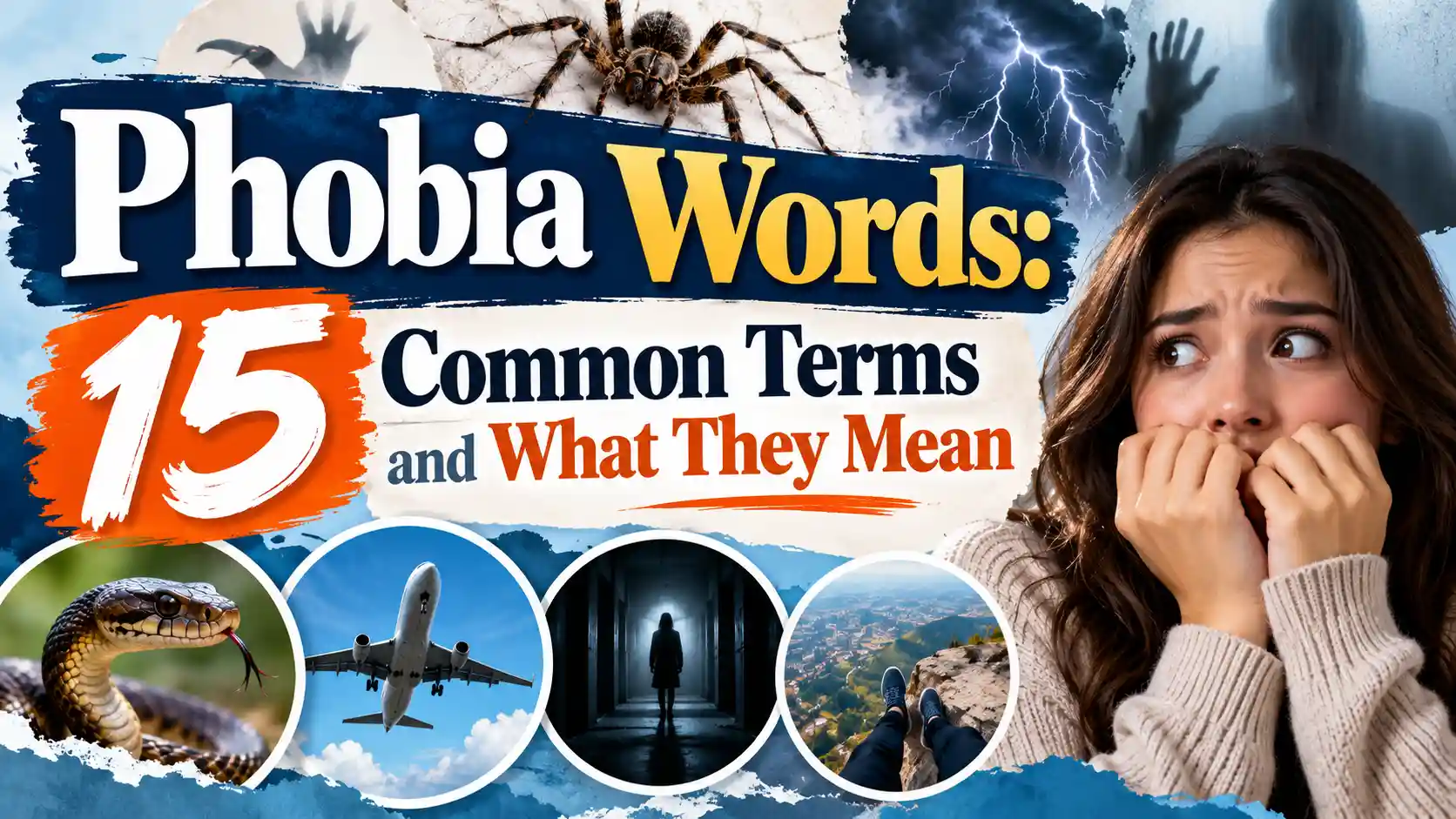
Have you ever wondered why we fear certain things, or why there are specific names for seemingly obscure anxieties? Phobia words are fascinating linguistic tools that describe the human experience of irrational, persistent fear. Whether you are writing a story, studying psychology, or simply curious about human behavior, understanding these terms provides insight into the mind’s protective mechanisms. In this guide, we will explore 15 common phobia words, break down their Greek and Latin roots, and provide context on how these fears manifest in everyday life. Let us demystify the language of fear together.
15 Common Phobia Words Defined
From fear of heights to the fear of failure, here are 15 frequently cited phobias and their precise meanings to help you better understand the landscape of human anxiety.
1. Arachnophobia
This is the extreme or irrational fear of spiders. It is one of the most common specific phobias globally, likely rooted in an evolutionary survival instinct to avoid potentially venomous creatures.
2. Ophidiophobia
This term refers to the fear of snakes. Similar to arachnophobia, this is often considered an evolutionary adaptation where humans learned to be wary of reptilian threats.
3. Acrophobia
Acrophobia is the intense fear of heights. It can cause significant anxiety even when an individual is in a relatively safe, high place like a balcony or a tall building.
4. Aerophobia
This is the fear of flying. It can range from mild discomfort during turbulence to a complete inability to board an airplane, often stemming from a fear of loss of control.
5. Cynophobia
This represents the fear of dogs. It is often developed during childhood, sometimes following a negative interaction or dog bite, and can lead to avoiding public parks or homes with pets.
6. Astraphobia
Known as the fear of thunder and lightning, this phobia is common in both children and adults. People with this condition often feel an overwhelming need to hide during storms.
7. Trypanophobia
This is the fear of needles or injections. It is a common cause of medical avoidance, where the individual may skip necessary vaccinations or blood tests due to distress.
8. Social Phobia (Social Anxiety Disorder)
This is the fear of being judged or scrutinized by others in social situations. It often manifests as a fear of public speaking or interacting with strangers.
9. Agoraphobia
Often misunderstood as fear of open spaces, it is actually the fear of situations where escape might be difficult or help would not be available if panic occurs.
10. Mysophobia
Frequently referred to as germophobia, this is the pathological fear of contamination and germs, often leading to excessive hand-washing or cleaning rituals.
11. Glossophobia
This is the specific fear of public speaking. Even those who are otherwise confident can experience extreme physical symptoms of anxiety when standing before a crowd.
12. Pyrophobia
The fear of fire. While fire is dangerous, those with pyrophobia experience an irrational, debilitating anxiety that goes beyond healthy caution.
13. Claustrophobia
The fear of confined spaces. People with this phobia may feel panicked in elevators, tunnels, or small rooms, fearing they will be trapped.
14. Nyctophobia
The intense fear of the dark. While common in childhood, some adults continue to experience significant distress in low-light environments.
15. Atychiphobia
This is the persistent, irrational fear of failure. It can prevent individuals from taking risks or pursuing goals because the potential for a negative outcome feels catastrophic.
Recommended Resources for Understanding Phobias
If you are interested in diving deeper into the psychology of fear and how to manage it, these resources are excellent starting points.
Phobia: Facing with Courage

Best For: Anyone seeking actionable steps to reduce anxiety and build resilience.
This book provides a compassionate look at identifying fears and building the necessary emotional tools to overcome them.
Practical Tips: Use this as a journal-style guide to track your progress when trying to step outside your comfort zone.
Recommended: Educational Psychology Books
Phobias – A dictionary of phobia terms and meanings

Best For: Students, writers, and psychology enthusiasts.
A comprehensive reference guide for anyone who wants a quick, authoritative source for understanding obscure phobia terminology.
Practical Tips: Keep this as a reference book to verify terminology for research or writing projects.
Recommended: Reference Materials
How to Choose Educational Materials on Phobias
When searching for resources on phobias, prioritize books written by licensed professionals or those based on cognitive-behavioral principles. Look for materials that offer practical strategies rather than just definitions. If you are struggling with a severe phobia, please note that self-help books are for informational purposes and should never replace the guidance of a qualified mental health professional.
Frequently Asked Questions
Can phobias be cured?
Many phobias can be effectively treated through exposure therapy, cognitive-behavioral therapy, and other evidence-based practices supervised by professionals.
Why do we develop phobias?
Phobias can develop from a combination of genetics, environmental factors, learned behaviors, and evolutionary survival instincts.
Final Thoughts
Understanding phobia words is more than just a linguistic exercise; it is a step toward empathy and personal awareness. Recognizing these fears is the first step toward managing them. Always consult with a professional if you feel your phobia is impacting your quality of life. Knowledge is a powerful tool in your journey to feeling more secure and empowered.
