

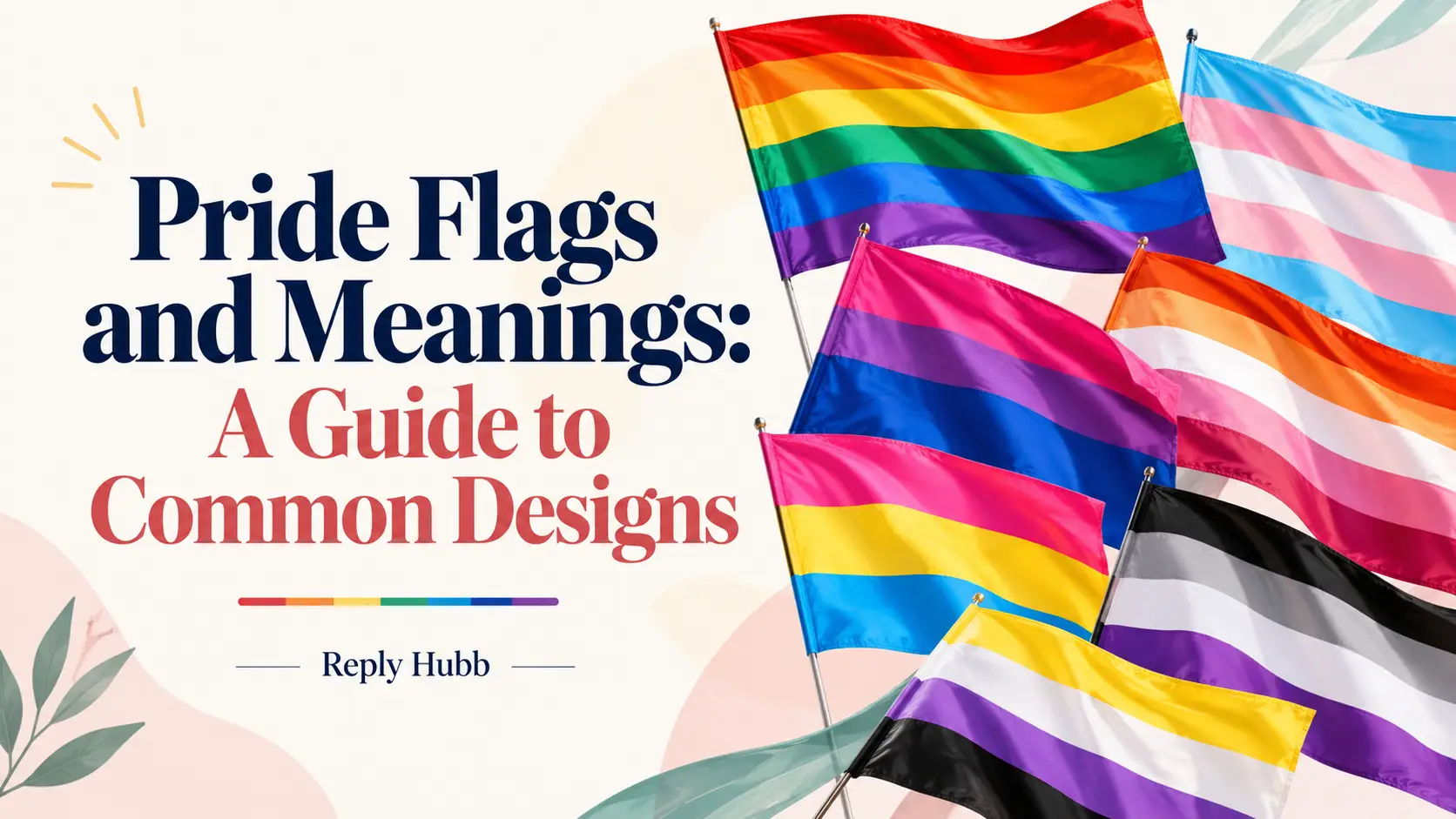
Pride flags are more than just colorful fabric; they are powerful symbols of history, resilience, and community identity. As the LGBTQIA+ movement has grown, so too has the diversity of flags representing various orientations and gender identities. Understanding pride flags and meanings allows us to better celebrate the nuances of our community and show authentic support. Whether you are looking to identify specific flags during Pride month or simply wanting to learn more about the rich symbolism behind these designs, this guide offers a clear, respectful, and educational overview of the most common pride flags you will encounter today.
An Overview of Popular Pride Flags
From the iconic rainbow to specific community flags, here is a breakdown of what these common symbols represent.
1. The Gilbert Baker Rainbow Flag
The original 1978 design featured eight colors, each with a specific meaning, such as hot pink for sex and red for life. Today, the most common iteration is the six-stripe version. It remains the universal symbol for the LGBTQIA+ community, representing diversity, inclusion, and the collective struggle for equality.
2. The Progress Pride Flag
Designed by Daniel Quasar, this flag adds a chevron of black, brown, light blue, pink, and white to the classic rainbow. The inclusion of these colors specifically highlights trans people and queer people of color, emphasizing that the movement must remain inclusive and intersectional to be effective.
3. The Bisexual Pride Flag
Created by Michael Page in 1998, this design uses three horizontal stripes: pink for attraction to the same gender, blue for attraction to the opposite gender, and a deep purple overlap representing the blending of attractions. It was designed to increase the visibility of bisexual individuals within the broader community.
4. The Transgender Pride Flag
This flag, designed by Monica Helms in 1999, features light blue, pink, and white stripes. The design is intentional: blue for boys, pink for girls, and white for those who are transitioning, intersex, or gender neutral. Its symmetrical design ensures that no matter how you hang it, it is always correct.
5. The Non-Binary Pride Flag
Consisting of yellow, white, purple, and black stripes, this flag represents individuals who do not identify exclusively as male or female. The yellow represents those outside the gender binary, white for those with multiple genders, purple for a mix of male and female, and black for those who identify as agender.
Deepen Your Knowledge of Pride Symbols
If you are interested in diving deeper into the history, evolution, and artistic design of pride flags, these curated resources provide excellent insight.
A Pocket Guide to Pride Flags

Best For: Quick reference and history buffs
This book acts as a visual dictionary for the queer community, documenting the origins and evolutions of various symbols.
Practical Tips: Perfect for carrying to pride parades or events to identify various flags on the fly.
Recommended: Educational Pride Literature
Our Flag Means Pride

Best For: Educational settings and libraries
A concise and well-researched guide that helps readers understand the nuances of the LGBTQIA+ flag ecosystem.
Practical Tips: Keep this on your coffee table for guests to learn more about the community.
Recommended: LGBTQIA+ Educational Guides
Demisexual Pride Flag Design

Best For: Personal identity expression
Specific flag merchandise allows individuals to showcase their unique identity clearly.
Practical Tips: Use this as a patch or accessory to personalize your denim jacket or bag.
Recommended: Identity Merchandise
Pride Flags Coloring Book

Best For: Stress relief and learning
A creative way to learn the specific color sequences of various flags while relaxing.
Practical Tips: Use this activity to teach children or friends about the different flags in a fun, pressure-free way.
Recommended: Educational Art Supplies
World Encyclopedia of Flags

Best For: Historical researchers
Provides historical context for the concept of vexillology (the study of flags).
Practical Tips: Great for comparing pride flags to national or regional flags to understand design history.
Recommended: Reference Books
Choosing the Right Pride Flag
When selecting a pride flag, consider its intended use. If you are displaying it outdoors, look for heavy-duty, weather-resistant nylon materials. For indoor wall displays, lightweight polyester or silk-screened cotton is often sufficient. Ensure the flag color accuracy matches official community standards to show respect for the design’s history. Furthermore, consider the size relative to your space; a standard 3×5 foot flag is the most common for parades, while smaller banners or pins are better for daily subtle expression.
Frequently Asked Questions
Why are there so many different pride flags?
As the queer community has grown, different sub-groups have developed their own flags to foster a sense of belonging and visibility for their unique lived experiences.
Is it okay to display a flag if I’m an ally?
Absolutely! Displaying the Progress Pride flag or the rainbow flag is a great way to signal that you are a safe, inclusive, and supportive ally to the LGBTQIA+ community.
Final Thoughts
Pride flags serve as vital beacons of visibility, history, and community. By learning about the distinct meanings behind these designs, you are participating in a tradition of acknowledgement and celebration. Whether you are exploring your own identity or supporting others, these symbols remind us of the progress made and the work still ahead. Stay proud, keep learning, and celebrate the beautiful diversity of our world.
